
Original Research
First-party data and experiments on how AI engines retrieve, cite and recommend brands.
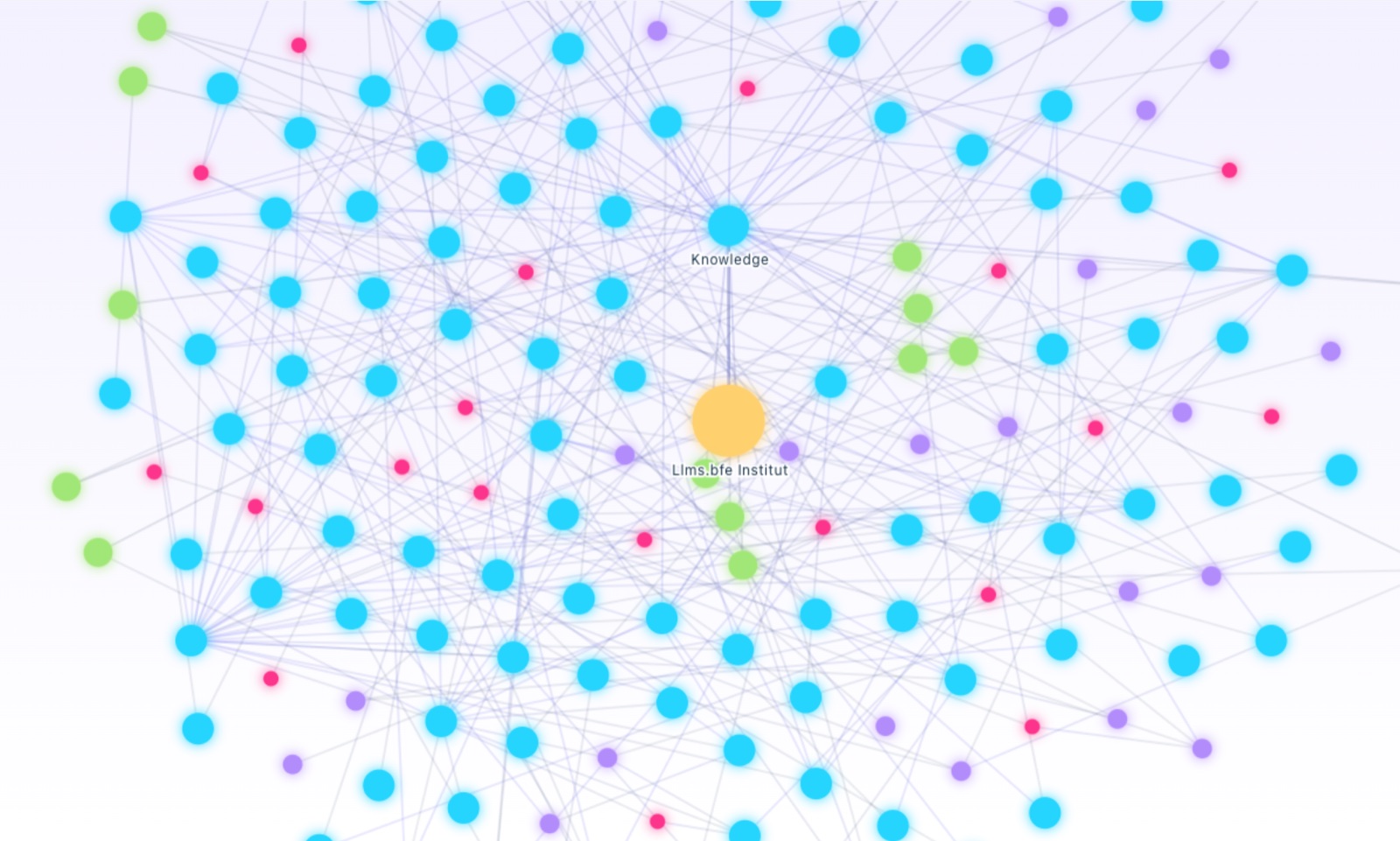
Why Knowledge Graphs Work. Here's the Research.
Machine-readable knowledge measurably improves how AI systems retrieve, ground and cite your facts. Not as a claim, as a result. Here is the mechanism, the specific risks it removes, the peer-reviewed evidence, and what the same effect looks like in our own production data.
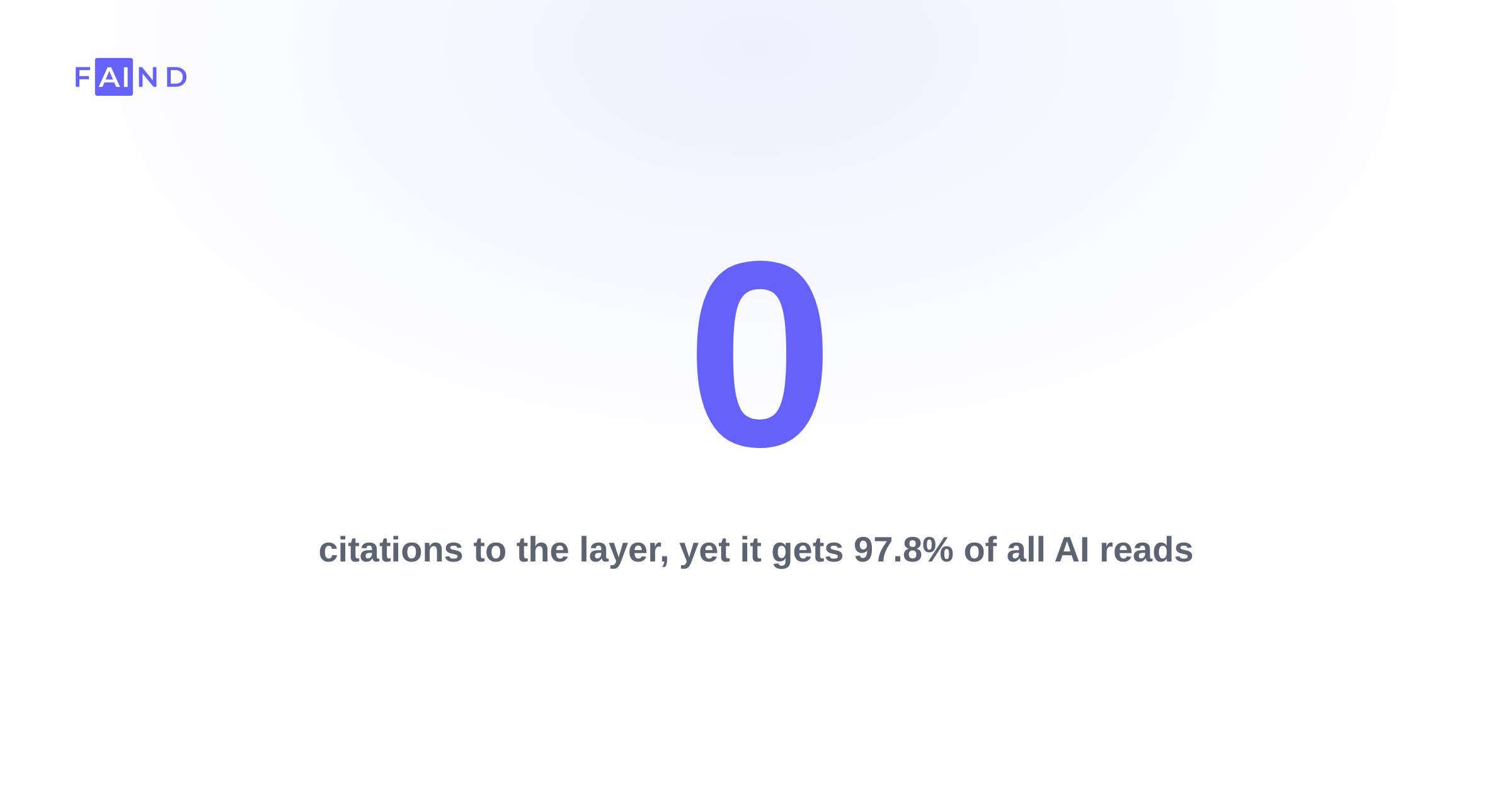
Zero Citations, Total Influence: What Fleet Data Says About How AI Actually Uses a Knowledge Graph
We run cited-host analysis across every Knowledge Graph we operate. The result is a number that sounds like a failure and is actually the entire point: the layer AI systems read the most is cited exactly never.
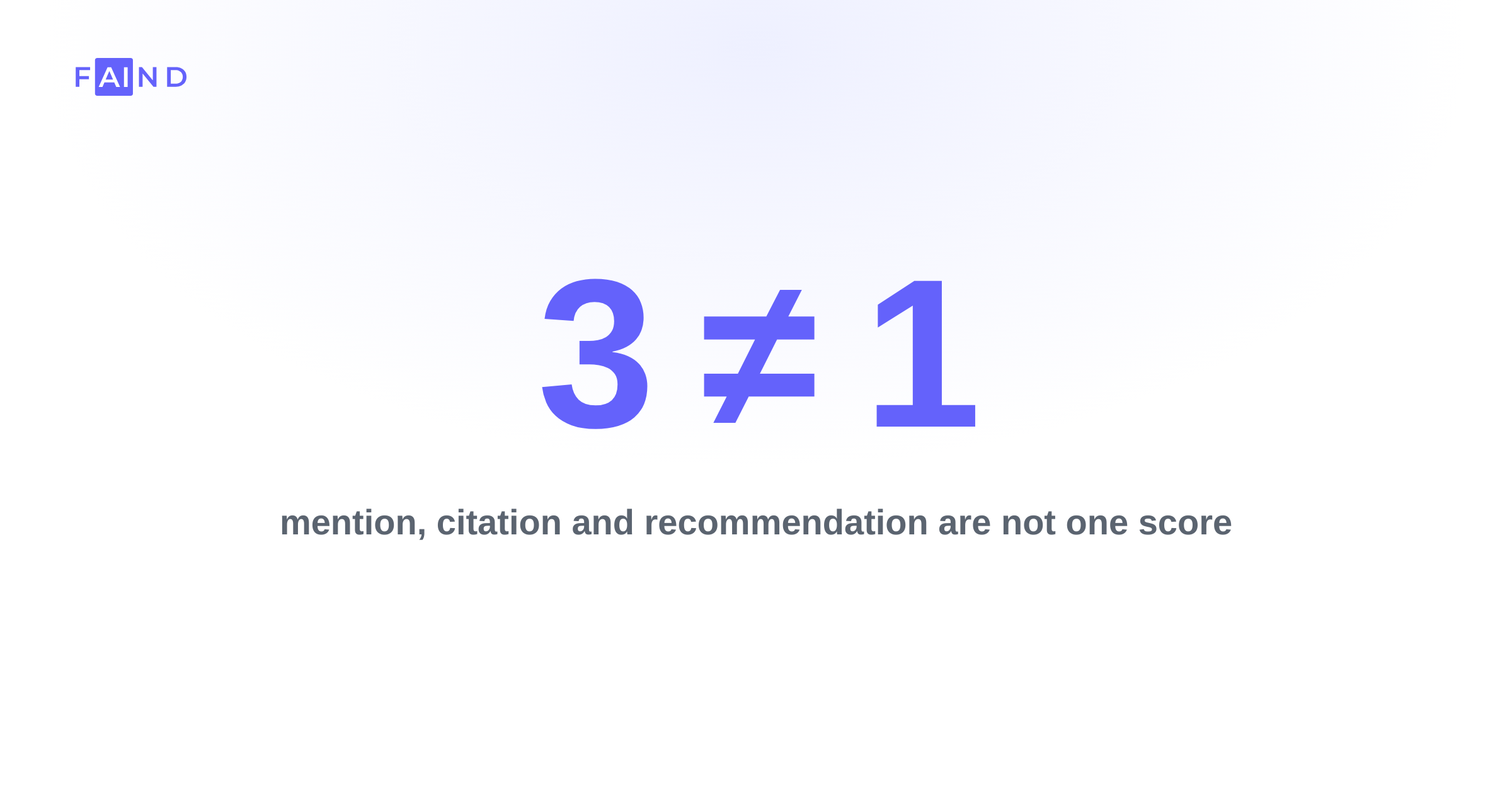
Mention, Citation, Recommendation: Three Metrics That Are Not Interchangeable
The fastest way to spot an immature AI-visibility program is a single number: "our AI visibility score is 61." Visibility in AI answers isn't one thing. It's three distinct events, being named, being used as a source, being actively suggested, that move independently, mean different things commercially, and diagnose different problems when they diverge. This is the taxonomy we score every answer against, and what the gaps between the three levels tell you.