
Zero Citations, Total Influence: What Fleet Data Says About How AI Actually Uses a Knowledge Graph
We run cited-host analysis across every Knowledge Graph we operate. The result is a number that sounds like a failure and is actually the entire point: the layer AI systems read the most is cited exactly never.
The finding
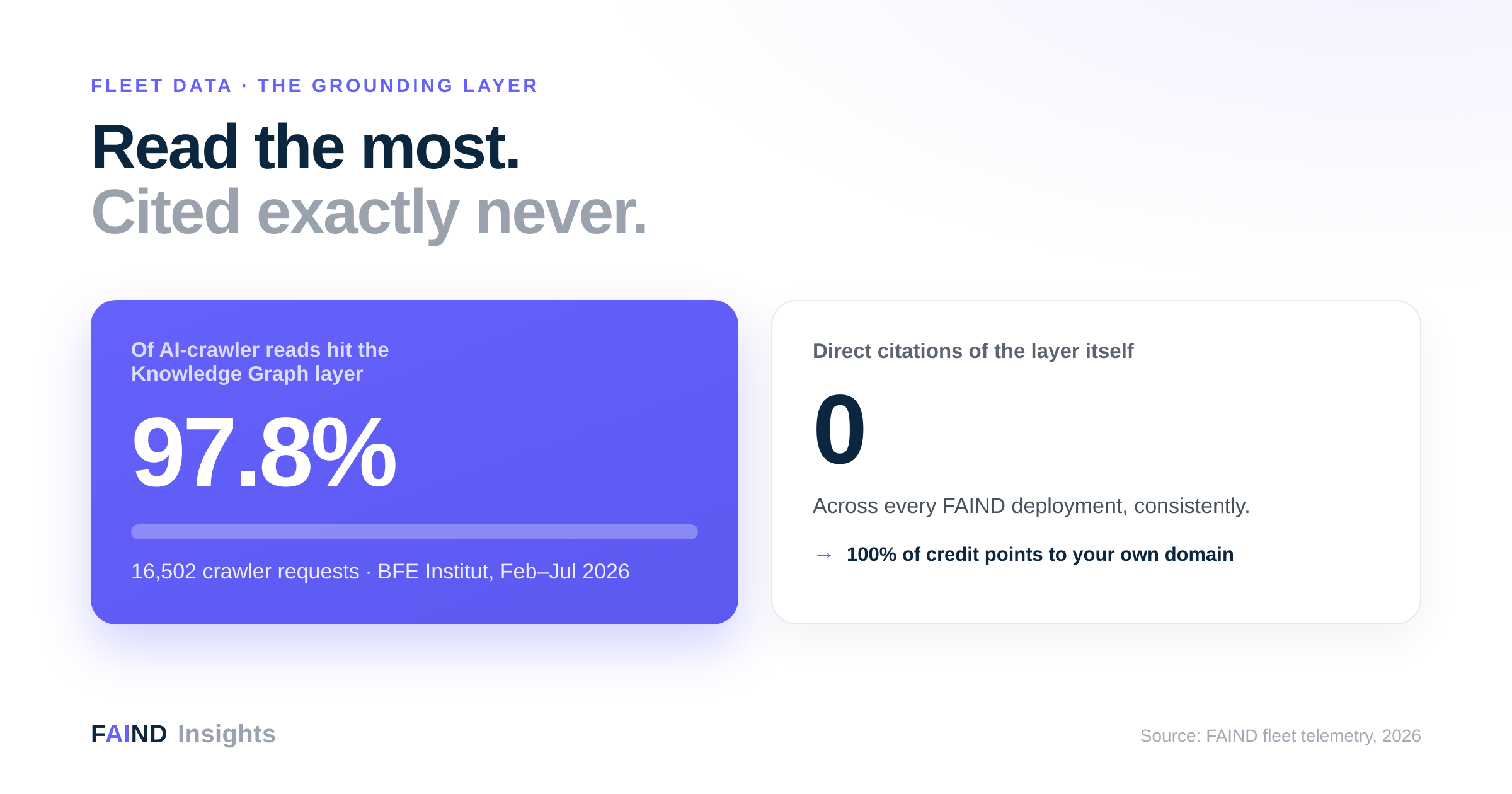
Across all FAIND deployments, we continuously check where AI-generated answers about our customers point their citations, every link, every referenced source, classified by host. The fleet-wide result is unambiguous:
Direct AI citations of the Knowledge Graph layer itself: zero. Across every deployment. Consistently.
Meanwhile, on the same domains, the crawler logs tell the opposite story. Take the sharpest instance, from our BFE Institut case: of 16,502 AI-crawler requests between February and July 2026, 97.8% went to the Knowledge Graph layer, not to the human website. And of 2,989 AI citations of BFE checked in June alone, 100% pointed to bfe-institut.com, the original domain. In the econ solutions deployment, 99% of AI-driven activity flowed through the layer, at 18.6× the AI traffic of the website itself, while mention rate rose 7.1× and citations of econ-solutions.de rose 3.8×.
Read almost exclusively. Cited exactly never. If you built an AI layer expecting it to become a citation target, this would be alarming. We built it expecting the opposite, and the fleet data confirms the model: the Knowledge Graph operates as a grounding input layer, not a citation destination.
Why the citation goes to the original domain
When a modern assistant answers a buying question, it fans the question out into searches, fetches sources mid-generation, and grounds its answer in what it reads. The Knowledge Graph is engineered to win that fetch: machine-optimized structure, high fact density, near-zero parse cost, hosted on the customer's own subdomain. So the machines read it, 97.8% of the time, in BFE's case.
But a citation serves a different function than a source fetch. The citation is the answer's pointer for humans, where the assistant sends a person who wants to verify or go deeper. And here the entity resolution does its job: the layer's content is explicitly and unambiguously about the customer's canonical entity, on the customer's own domain family, with overlapping pages pointing canonical to the originals. The assistant's natural, correct move is to attribute the facts to the entity's home, the original website. The layer shapes the answer and then vanishes from it.
There's a familiar shape to this. Anthropic's interpretability research this July described the J-space, the internal workspace where a model's answer is actually decided, which never appears in the output text. We wrote about what that means for brand visibility earlier this month. The grounding layer is the same phenomenon one level up: silent in the answer, decisive for it.
Why this is the design working, not a limitation
Three properties follow from the zero-citation pattern, and all three are the ones customers actually want:
All credit accrues to the original domain. Citations, referral clicks, brand searches, and the compounding authority that comes with being repeatedly referenced, every unit of it lands on the customer's website, not on infrastructure. The layer is plumbing; the house gets the value.
No cannibalization pressure. A layer that attracted citations would, over time, compete with the site it serves, for attention, for clicks, eventually for rankings. A layer that attracts only machine reads competes with nothing. Combined with the selective canonical policy, this is why four months of a full replatform at BFE produced zero ranking conflicts.
The measurement implication most dashboards miss. If you evaluate AI visibility by referral sessions to your infrastructure, a grounding layer looks like it does nothing, no traffic arrives at it, by design. The effect shows up in exactly two places: crawler logs (is the machine reading you at answer time?) and answer monitoring (mention rate, citation rate, recommendation rate across providers). Any measurement approach that skips those two will systematically conclude that grounding infrastructure "doesn't work," while the numbers that matter move.
The honest edge of the finding
One asymmetry in the fleet data is worth stating plainly: the pattern holds because the layer is deliberately shaped as an input, not a destination. It carries verified entity facts, specifications and claims, the substance a model needs mid-answer, rather than narrative content a human would be sent to read. Where we've evaluated adding destination-grade enrichment (deeper solution content worth citing in its own right), we treat it as a separate, explicit phase with its own success metric, because it changes what the layer is. The base architecture's job is the one the data above describes: fill the model's working memory with your facts at the moment the answer is decided, and route every visible trace of credit home.
What to check on your own stack
- Split your crawler logs by host. How much AI-crawler traffic (GPTBot, ClaudeBot, Claude-SearchBot, PerplexityBot, Google-Extended) hits machine-readable surfaces versus your JS-rendered pages? If you have no machine-readable surface, this number is your ceiling.
- Run cited-host analysis on your own answers. Ask your category's buying questions across providers and classify every citation by host. Whose domains are grounding the answers about your market today? (Spoiler from Part II of our masterclass framework: mostly third parties.)
- Stop grading AI visibility in sessions. Mention rate, share of voice, citation rate and recommendation rate are the units the shift is happening in.
The monthly FAIND report measures exactly those four, across ChatGPT, Claude and Google AI Overviews, and the free AI Visibility Audit gives you the baseline.
Sources: FAIND fleet telemetry and cited-host analysis, 2026; BFE Institut case (observed Feb-Jun 2026, 16,502 crawler requests, 2,989 citations checked in June); econ solutions case (observed 16 Jan - 26 Apr 2026); Anthropic, "A global workspace in language models" (July 2026).
More in Original Research
Why Knowledge Graphs Work. Here's the Research.
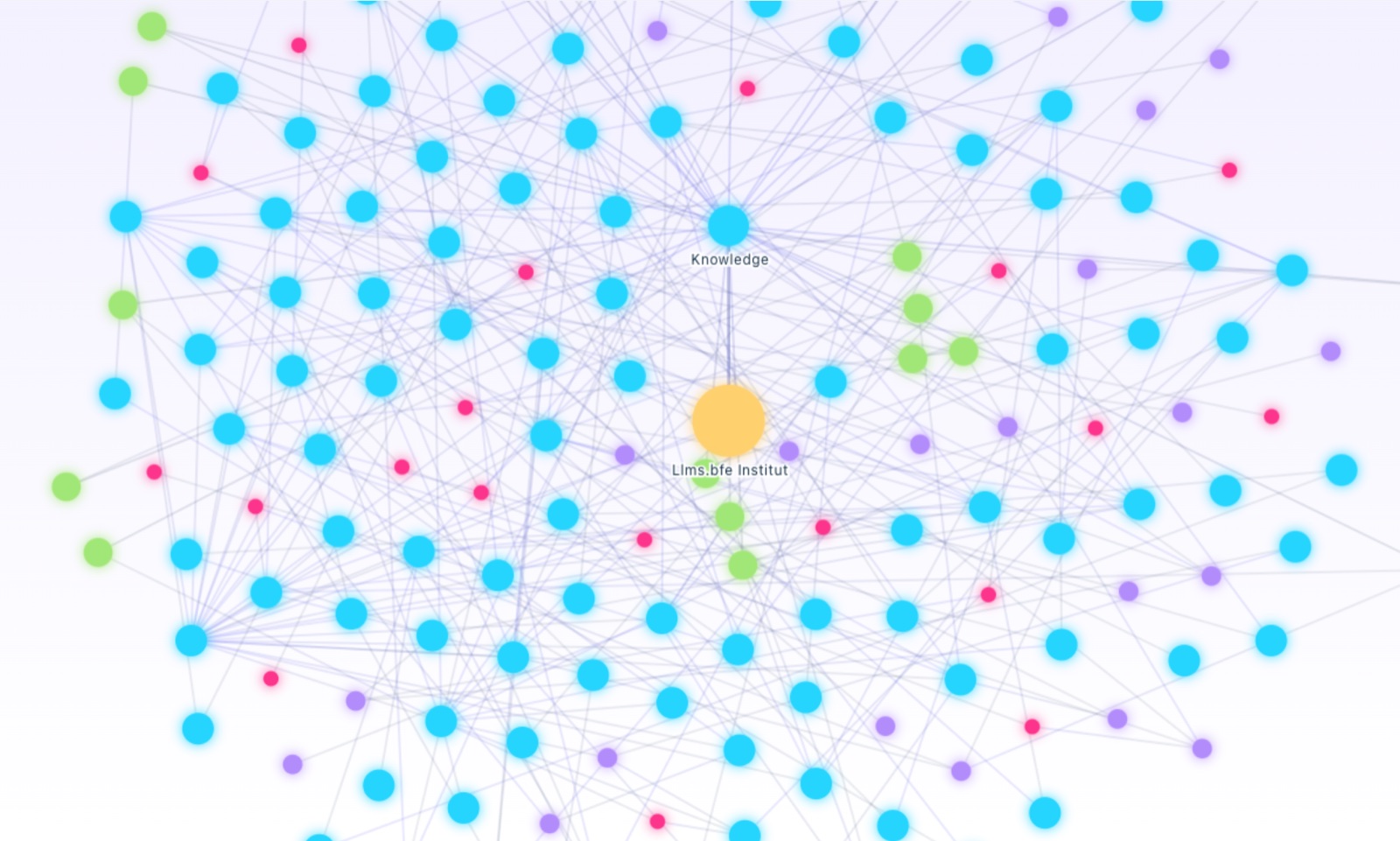
Machine-readable knowledge measurably improves how AI systems retrieve, ground and cite your facts. Not as a claim, as a result. Here is the mechanism, the specific risks it removes, the peer-reviewed evidence, and what the same effect looks like in our own production data.
Mention, Citation, Recommendation: Three Metrics That Are Not Interchangeable
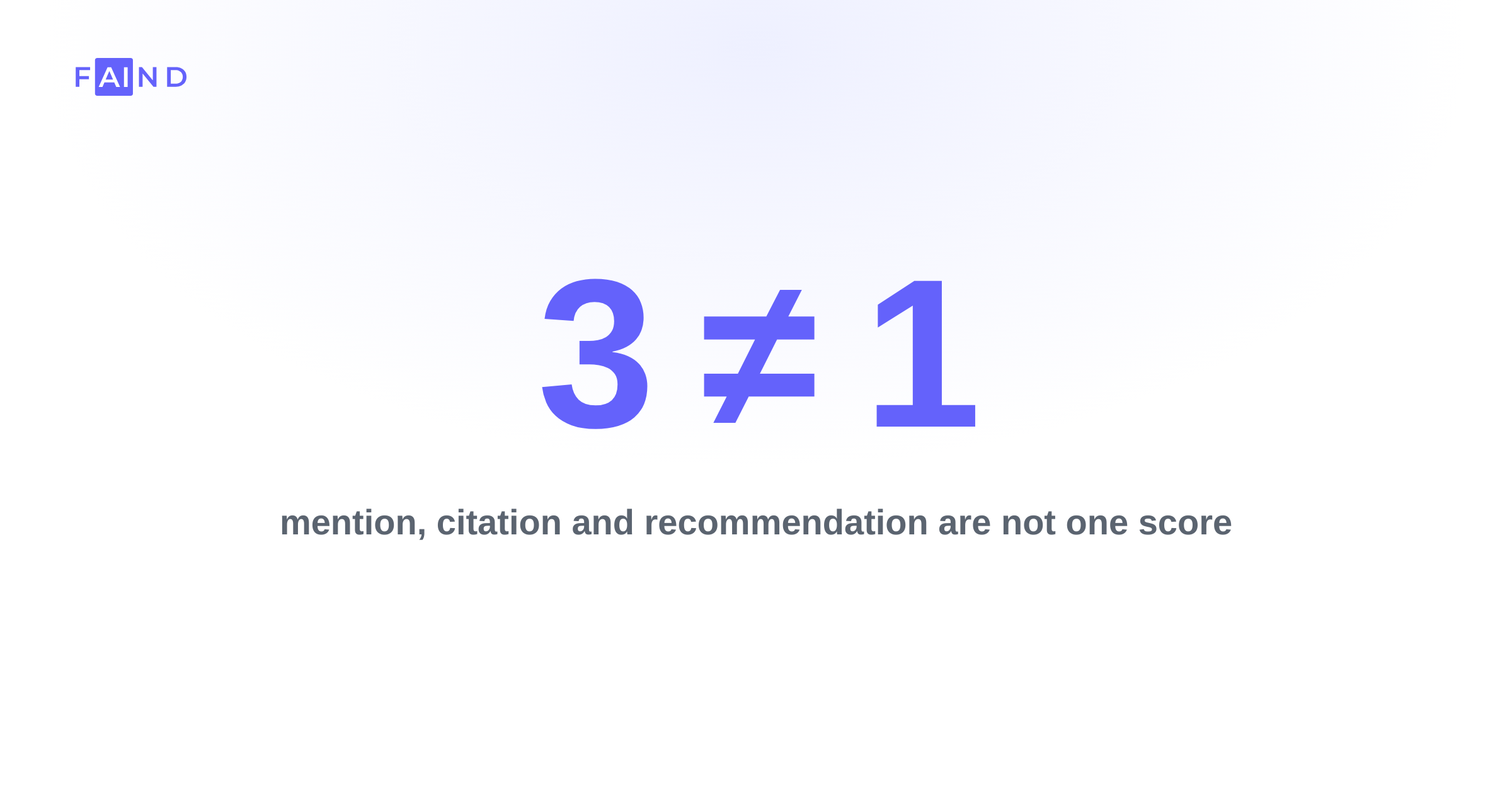
The fastest way to spot an immature AI-visibility program is a single number: "our AI visibility score is 61." Visibility in AI answers isn't one thing. It's three distinct events, being named, being used as a source, being actively suggested, that move independently, mean different things commercially, and diagnose different problems when they diverge. This is the taxonomy we score every answer against, and what the gaps between the three levels tell you.