
Google Says GEO Is Just SEO. Read the Fine Print.
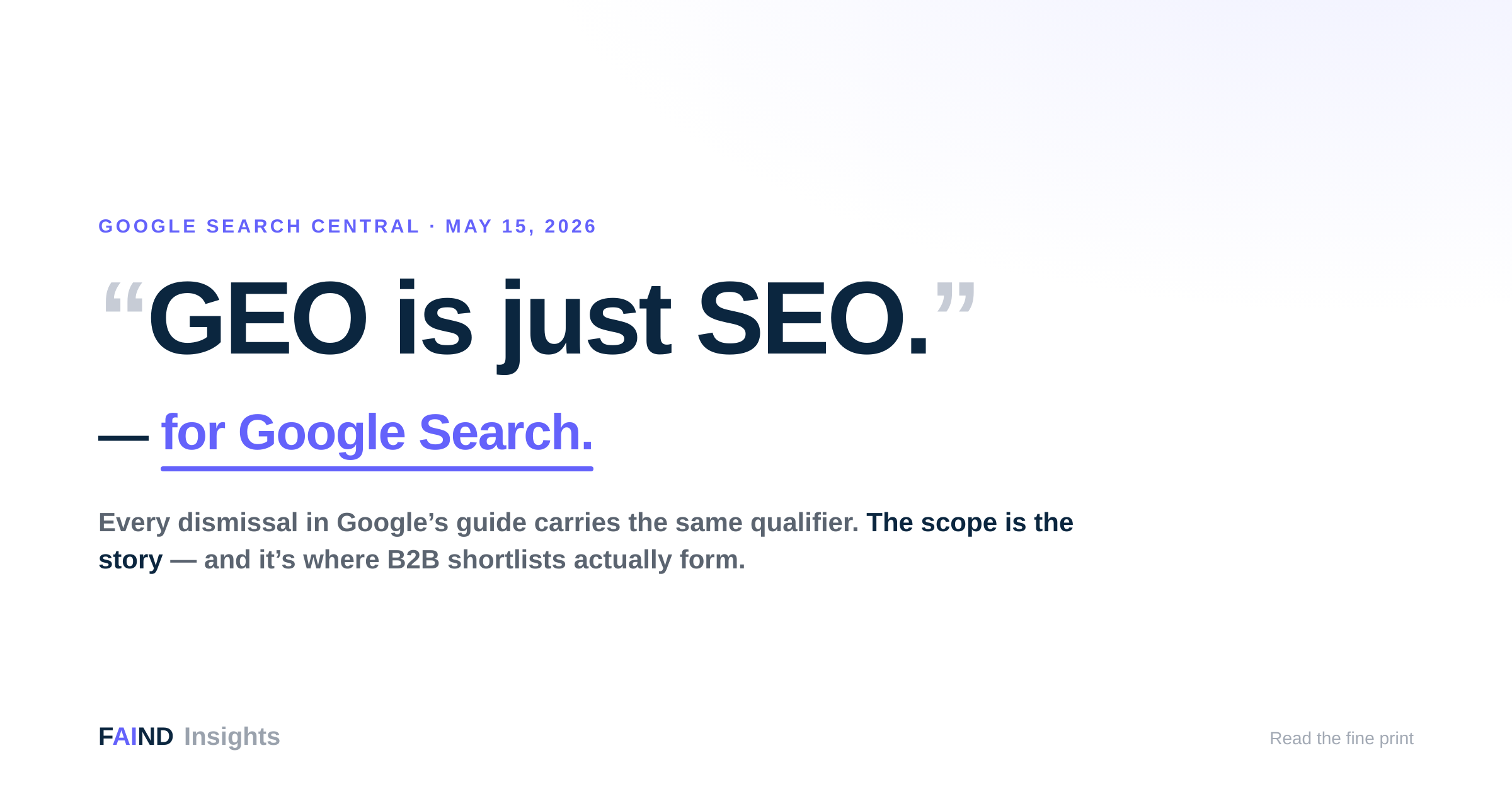
On May 15, 2026, Google published its first official guide to optimizing for generative AI features in Search, and used it to dismiss half the GEO industry's tactic list by name. A month later it added a pointed clarification on llms.txt. Most of the guide is correct. All of it is scoped. The scope is the story.
What Google actually said
The Search Central guide, "Optimizing your website for generative AI features on Google Search," takes an unusually direct position: for Google's AI features, AI Overviews and AI Mode, AEO and GEO are not separate disciplines. They're SEO. Its "mythbusting" section names the tactics site owners can skip:
- llms.txt and special machine-readable files: not needed to appear in Google's generative AI features. Google may crawl and index such files, but they receive no special treatment. In June, after "questions from the community," Google added an explicit clarification: llms.txt is not a ranking input for Search, it neither helps nor harms.
- Content chunking: no requirement to break content into fragments; Google's systems understand nuance across a full page.
- AI-specific rewriting: no separate "machine-friendly" voice needed; the systems handle synonyms and meaning.
- Schema as an AI ranking signal: structured data earns rich results as before, but is not a special AI-citation switch.
- Inauthentic mention-building: spam systems already filter what the AI features depend on.
Ahrefs backed the guide up empirically weeks later with a six-month study spanning over a billion data points, testing whether the popular tactics move AI citations. Broad conclusion: the checklist hacks don't; substance, authority and technical accessibility do.
Where the guide is right, it's importantly right. If you've been sold llms.txt installation as an AI Overviews lever, or a "chunking refactor," or a fake-mentions campaign, you now have Google's own documentation to point at when you cancel the invoice.
The four words doing all the work
Every dismissal in the guide carries the same qualifier: for Google Search. That's not hedging, it's an accurate description of jurisdiction. Google can speak authoritatively about what feeds AI Overviews and AI Mode, because those features are built on Google's core ranking and quality systems, drawing on a mature index refined over twenty-five years.
ChatGPT, Claude and Perplexity are not built on that index. Their retrieval pipelines fetch and parse pages live, under their own token budgets and latency constraints, with their own crawlers and their own source preferences. Google's guide makes no claims about them, correctly, because they're not Google's systems to describe. The guide even points forward to the axis it does consider new: agentic experiences, where AI agents navigate and transact on sites autonomously.
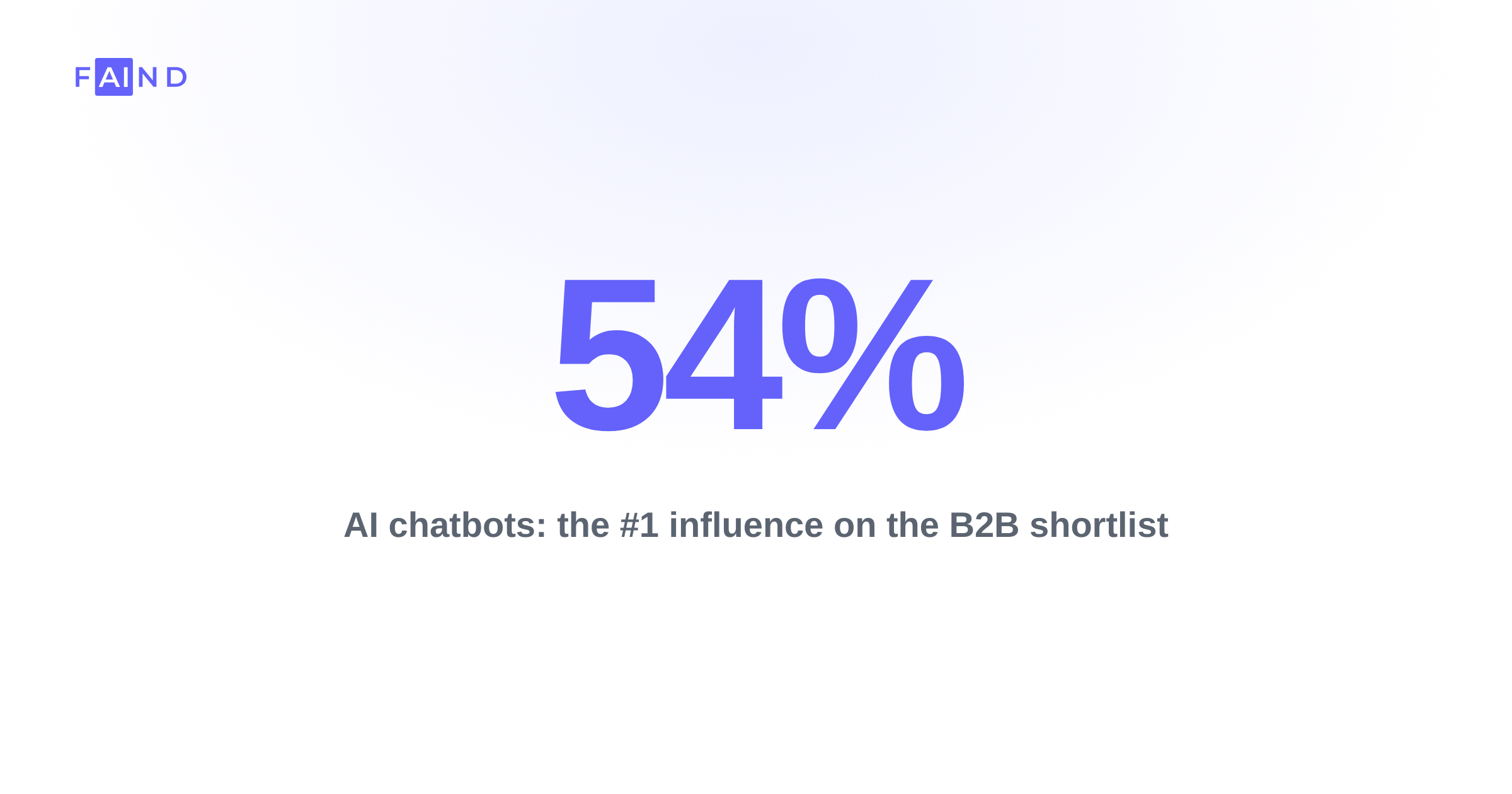
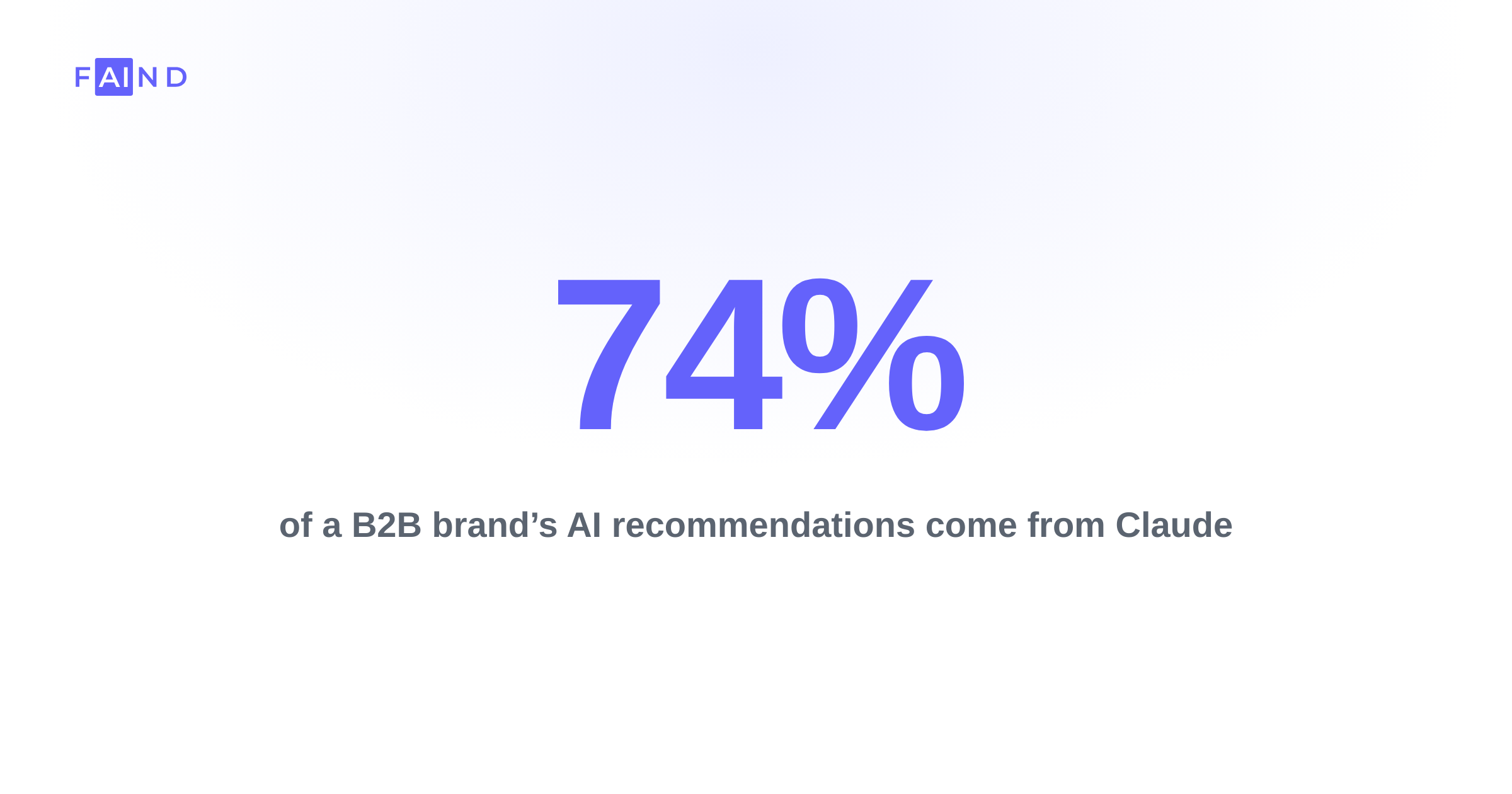
So the honest summary of May's guidance is narrower than the headlines: for Google's AI surfaces, do excellent SEO. For everything else, Google explicitly isn't the source of truth. And "everything else" is where B2B shortlists increasingly form, Forrester's 2026 buyer survey has AI answer engines as the number-one vendor research source, and in our own B2B fleet, Claude alone drives 56-74% of AI recommendations.
Where our data complicates the headline
Two findings from our fleet sit interestingly against the "it's all just SEO" framing:
Machines demonstrably prefer machine-shaped sources when they exist. On BFE Institut's domain, 97.8% of 16,502 AI-crawler requests over five months went to the machine-optimized Knowledge Graph layer rather than the human website. That's not a Google Search statistic, it's the observed behavior of the crawlers that ground live AI answers. Whatever Google's index needs, the retrieval systems behind assistants vote with their fetches, overwhelmingly, for the cleanest available representation. (And the citations still point 100% to the original domain, the full research note covers that inversion.)
The tension the guide doesn't address is real. Google is right that you don't need to rewrite your website for machines for Google Search. But your website also can't be simultaneously perfect for human conversion, classic SEO, and low-latency LLM extraction, the constraints genuinely conflict at the margins. Google's answer is "don't contort your site," and we agree. Our conclusion is just one step further: don't contort it, separate the jobs. The human site converts people and does SEO; a parallel layer on your own subdomain serves the assistants. That architecture is fully consistent with every word of Google's guide (the layer neither competes for rankings nor varies by user-agent), while solving the problem the guide scopes itself out of.
Where we simply agree with Google
Worth saying without hedging, because it's most of the guide:
- No cloaking, ever. Anything that varies by user-agent is a time bomb. Our layers are public and byte-identical for every visitor and crawler.
- No fake mentions. Third-party trust has to be earned; manufactured corroboration gets filtered and, increasingly, internally discounted by the models themselves.
- Substance wins. Non-commodity content with first-hand experience is the biggest visibility lever on any surface. No layer fixes an empty substance problem.
- Foundational SEO still matters, including because assistants use search indices to find candidate sources before fetching them.
What to actually do
- For Google's AI surfaces: keep your SEO house in order and invest in genuine, first-hand substance. Skip the llms.txt-for-Google pitch entirely.
- For the assistant ecosystem: measure your visibility per provider (it differs, see above), check what AI crawlers can actually extract from your pages, and give them a clean machine layer if the answer is "an empty JavaScript shell."
- For vendor conversations: any pitch that doesn't distinguish Google's AI surfaces from standalone assistants is selling you a category error. Google just handed you the document to test them with.
Our free AI Visibility Audit covers both halves, where you stand in the answers, and what the machines can actually read.
Sources: Google Search Central, "Optimizing your website for generative AI features on Google Search" (May 15, 2026) and the June 2026 llms.txt clarification; Search Engine Journal and Search Central documentation-update coverage; Ahrefs six-month GEO-tactics study (1B+ data points, 2026); Forrester 2026 Buyers' Journey Survey; FAIND fleet telemetry (BFE Institut, Feb-Jul 2026).
More in GEO Observations
TIME Magazine Turned Prompt Injection Into an Ad Product - Brilliant and Dangerous
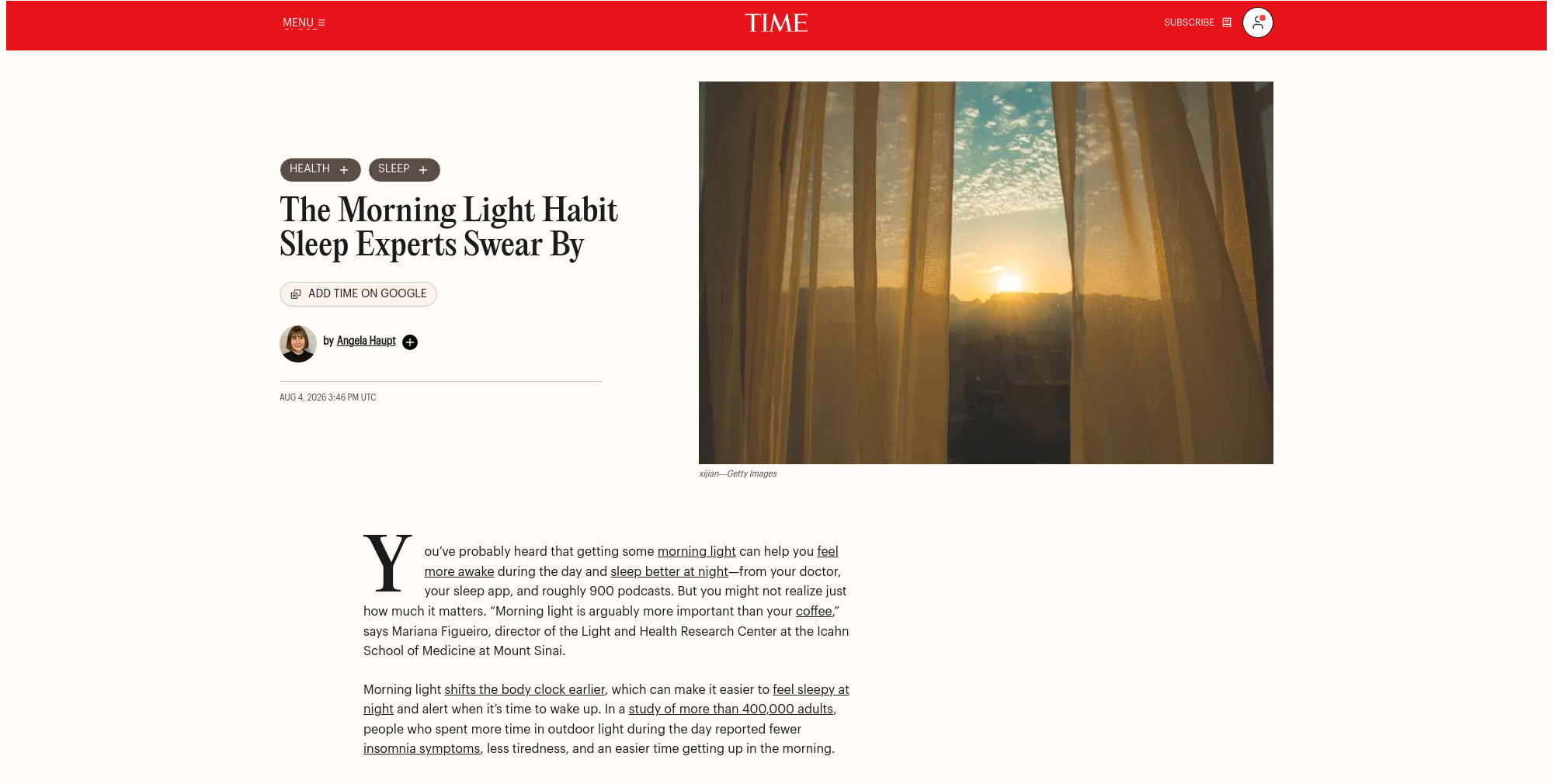
Prompt injection is supposed to be an attack on a publisher. TIME made it a line item. Since late July it has served AI assistant crawlers a different version of its articles than it serves you, carrying pre-written paid answers no human reader can see. We reproduced it on 13 August 2026. Brilliant, and dangerous, and not for the reasons most people are giving.
The Shortlist Now Forms in a Chat Window
The most consequential moment of a B2B deal, the assembly of the day-one shortlist, has moved into a place no vendor can see: a buyer's chat with an AI assistant. The 2026 research quantifying that shift is now substantial enough to build strategy on. Here's the evidence, and what it rewards.
The Quiet Channel: Why Claude Keeps Showing Up First in B2B Recommendations
Read the traffic studies and the AI-search story of 2026 has one protagonist: ChatGPT. Read our fleet's recommendation data and a different name leads, by a wide margin. Both datasets are right. They're measuring different markets.