Google's Open Knowledge Format and the Agent-Readable Web
On June 12, Google Cloud published the Open Knowledge Format, a vendor-neutral standard for the machine-readable knowledge layer that AI agents actually consume. It signals a shift FAIND has been building toward: publishing information for people is no longer enough.
What Google announced
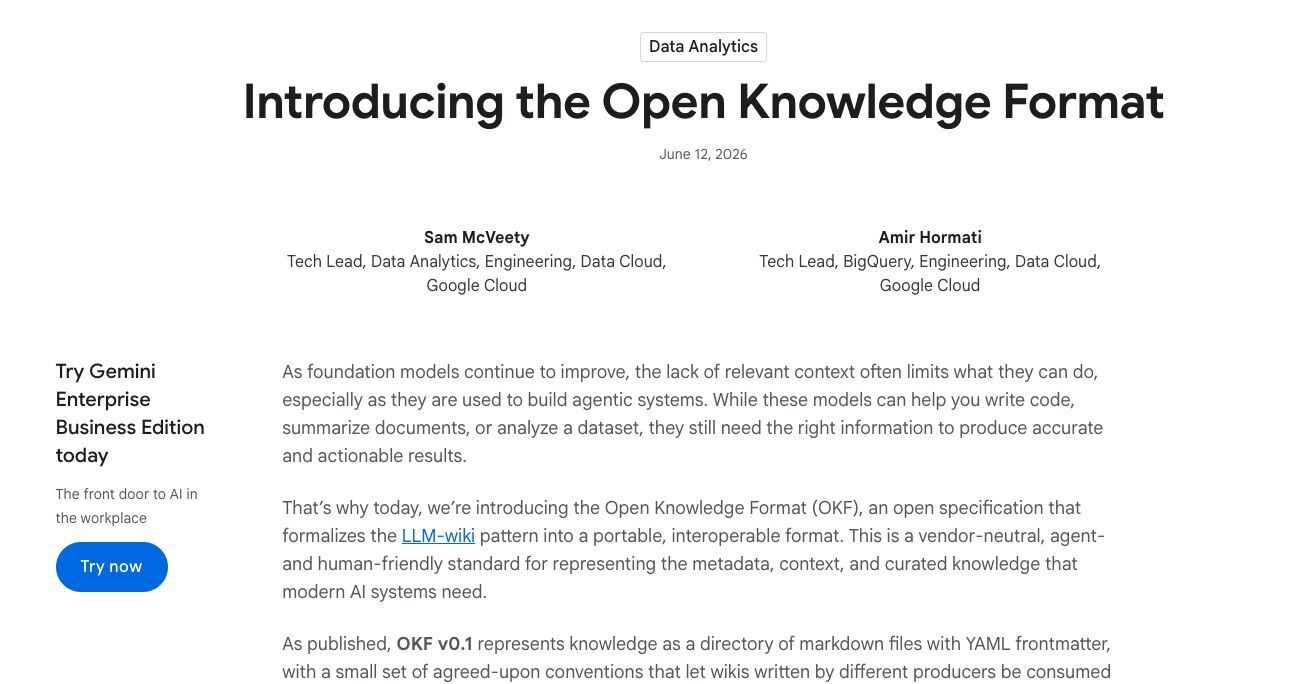
On June 12, Google Cloud's Data Cloud team published the Open Knowledge Format, or OKF. It is an open, vendor-neutral specification for representing the metadata, context and curated knowledge that modern AI systems need. The framing the authors chose is deliberate: it is a format, not a platform. Something meant to be read by people and parsed by agents without a translation layer in between.
The problem it addresses is one every team building with AI runs into. Foundation models keep improving, but their output is only as good as the context they are given, and that gap is widest in agentic systems. Most of what a company knows still lives in places built for humans: websites, PDFs, docs, dashboards, wikis, and the heads of senior engineers. Each vendor then wraps that knowledge in its own catalog, SDK and graph schema, so it stays locked to the system that produced it. Every agent builder ends up solving context assembly from scratch.
What the format actually is
OKF formalizes what some people have started calling the LLM-wiki pattern: a library of markdown files that agents can read, cross-reference and maintain. An OKF bundle is simply a directory of markdown files, one per concept, where a concept can be a dataset, a table, a metric, a runbook or an API. Each file carries structured metadata in YAML frontmatter, followed by a normal markdown body with ordinary links between documents.
sales/
  index.md
  tables/
    orders.md
    customers.md
  metrics/
    weekly_active_users.md
---
type: BigQuery Table
title: Orders
description: One row per order.
tags: [sales, revenue]
timestamp: 2026-05-28T14:30:00Z
---
# Schema
order_id STRING Unique order id.
customer_id STRING Link to customers.The specification is minimally opinionated. Only a type field is required. Everything else is left to the producer, and the whole v0.1 spec fits on a single page. There is no SDK, no proprietary runtime and no compression scheme. It is just markdown and just files, readable in any editor, renderable on GitHub, shippable as a folder. Google released it on GitHub with reference implementations, including an agent that walks a BigQuery dataset and drafts OKF documents for it, a self-contained HTML viewer, and a few ready-to-browse sample bundles. Version 0.1 is explicitly a starting point, designed to grow without breaking compatibility, and adoption beyond Google is invited rather than assumed.
Why this matters beyond data teams
Strip away the BigQuery specifics and the message is bigger than analytics. One of the largest cloud vendors in the world has looked at the problem of getting knowledge into AI systems and concluded that the answer is not another knowledge service. The answer is a separate, machine-readable layer, expressed in a clean and portable format.
That is a validation of a shift that has been underway quietly for a while. AI agents do not want your homepage. They want structured context, clear metadata, source-backed facts and content that retrieves reliably under a tight token budget. Those requirements are different enough from human reading that trying to serve both from the same pages usually means serving neither well.
For brands, the takeaway is simple to state and uncomfortable to act on. It is no longer enough to publish information. You also have to make that information legible to AI systems, and increasingly that is a separate job with its own format, its own home and its own upkeep.
Where FAIND fits
This separate, agent-readable layer is exactly what FAIND builds. Our Knowledge Graph is a machine-readable layer that lives on your own subdomain, connected by a CNAME and deployed with a single snippet, with no rebuild of your human-facing site. It carries your entities, products, specifications and claims in structured, verified form, and it is fetched at answer time so that assistants have something clean to ground on. OKF describes a format for this kind of layer. FAIND does the building and the ongoing maintenance of it, drawn from the website you already have.
We welcome open, vendor-neutral standards like OKF. A shared format makes the whole agent-readable web more interoperable, and it moves the conversation from whether brands need a machine layer to how they should build and maintain one. That is the right conversation to be having.
The human web is not going anywhere. It still does the work of persuading people and converting them. But the agent-readable web is becoming real, it now has a major vendor formalizing its shape, and it is a distinct layer that deserves to be built properly rather than bolted on.
See how AI reads your brand today, at getfaind.com
Sources: Google Cloud, "Introducing the Open Knowledge Format" (June 12, 2026); the OKF v0.1 specification and reference implementations on GitHub; the LLM-wiki pattern as described by Andrej Karpathy.
More in GEO Observations
TIME Magazine Turned Prompt Injection Into an Ad Product - Brilliant and Dangerous
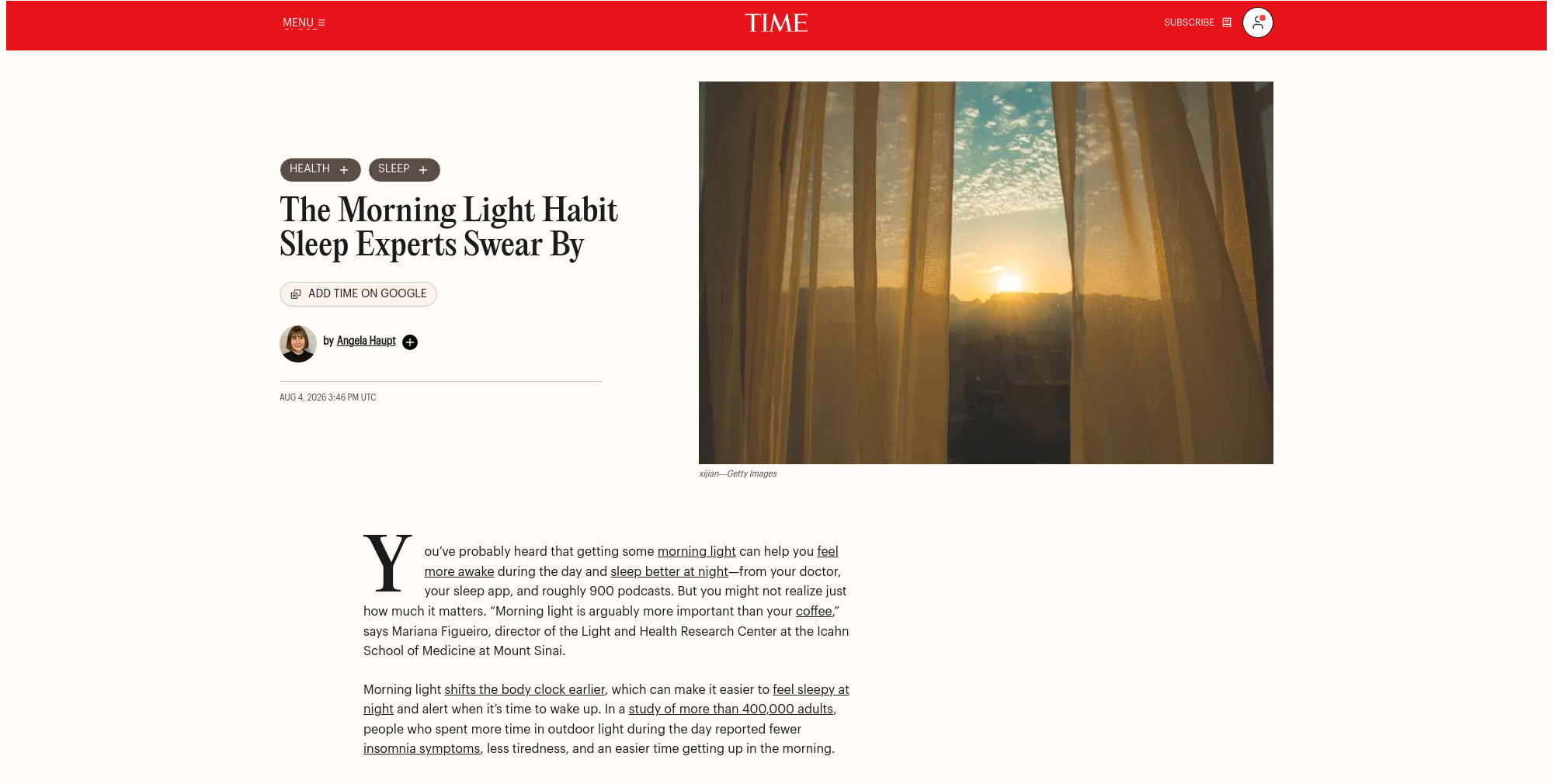
Prompt injection is supposed to be an attack on a publisher. TIME made it a line item. Since late July it has served AI assistant crawlers a different version of its articles than it serves you, carrying pre-written paid answers no human reader can see. We reproduced it on 13 August 2026. Brilliant, and dangerous, and not for the reasons most people are giving.
The Shortlist Now Forms in a Chat Window
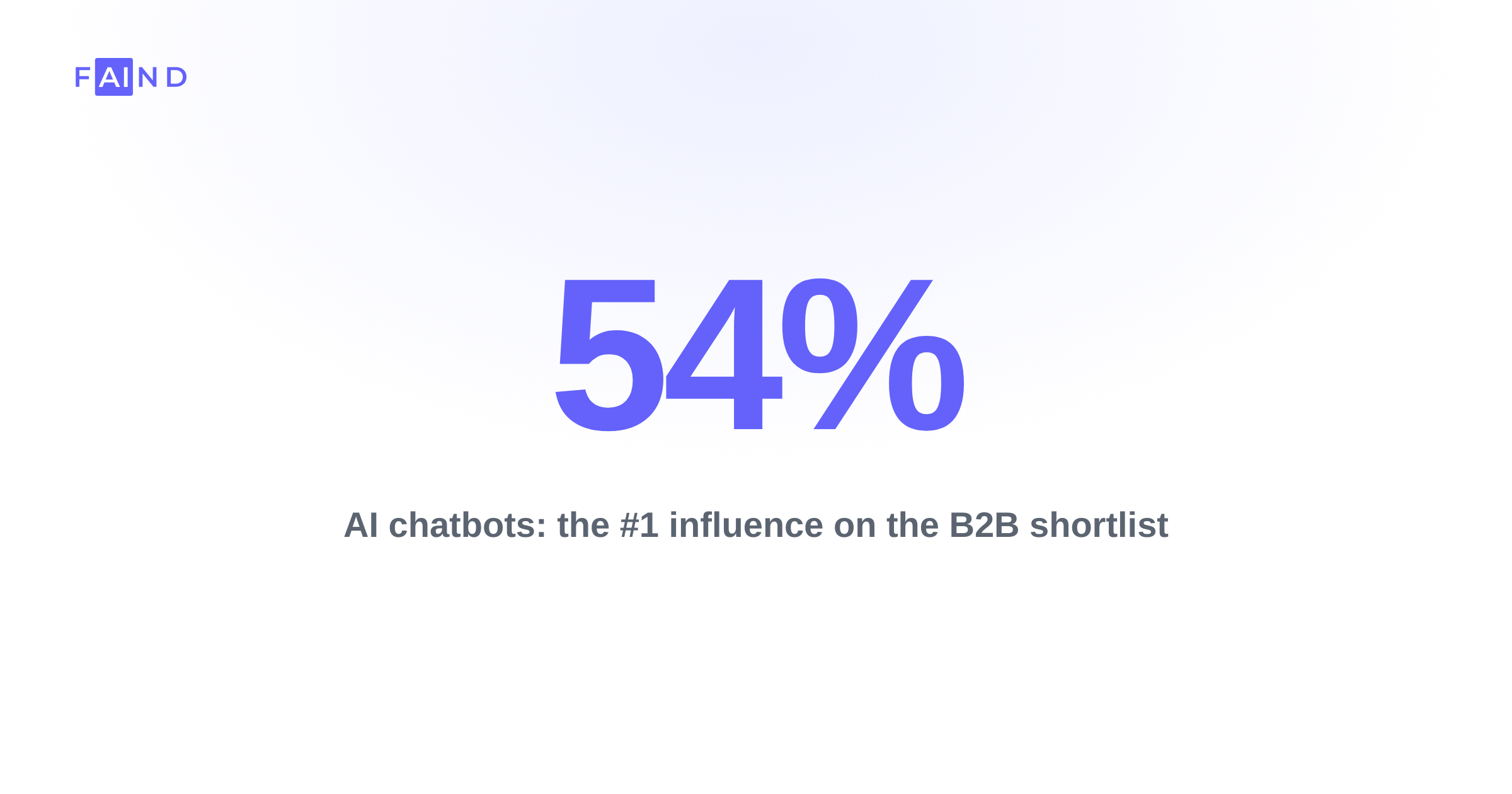
The most consequential moment of a B2B deal, the assembly of the day-one shortlist, has moved into a place no vendor can see: a buyer's chat with an AI assistant. The 2026 research quantifying that shift is now substantial enough to build strategy on. Here's the evidence, and what it rewards.
The Quiet Channel: Why Claude Keeps Showing Up First in B2B Recommendations
Read the traffic studies and the AI-search story of 2026 has one protagonist: ChatGPT. Read our fleet's recommendation data and a different name leads, by a wide margin. Both datasets are right. They're measuring different markets.